Black spots on driveways and sidewalks don’t just appear overnight, and they don’t go away on their own. For many homeowners in Indianapolis, they start as small dark specks and slowly grow into stubborn stains that make concrete look old, neglected, and even unsafe.
The frustrating part? Most people try scrubbing, pressure washing, or store-bought cleaners and still see the spots come back.
At A-1 Window Cleaning, we often hear the same question: “What are these black spots—and how do I get rid of them for good?”
The answer depends on what’s causing them in the first place.
The Real Problem: Black Spots Are Usually Living Growth or Embedded Contamination
Concrete is porous, which means it absorbs moisture, dirt, and organic material. Once those materials settle into the surface, they create the perfect environment for biological growth or deep staining.
In Indianapolis, where humidity, rain, snowmelt, and shade all cycle throughout the year, concrete surfaces are constantly exposed to conditions that encourage black spotting.
These dark marks typically fall into a few main categories.
Black Mold and Mildew Growth
One of the most common causes of black spots on sidewalks and driveways is mold or mildew.
These organisms thrive in damp, shaded areas, especially on concrete that doesn’t dry quickly after rain or snow. Spores land on the surface, settle into pores, and begin growing roots that darken over time.
What starts as faint spotting can quickly spread into larger clusters, especially in areas near landscaping, shaded walkways, or the north side of homes.
Why it happens in Indianapolis:
- High humidity in spring and summer
- Frequent rain and snowmelt
- Long periods of shade under trees or structures
How to stop it:
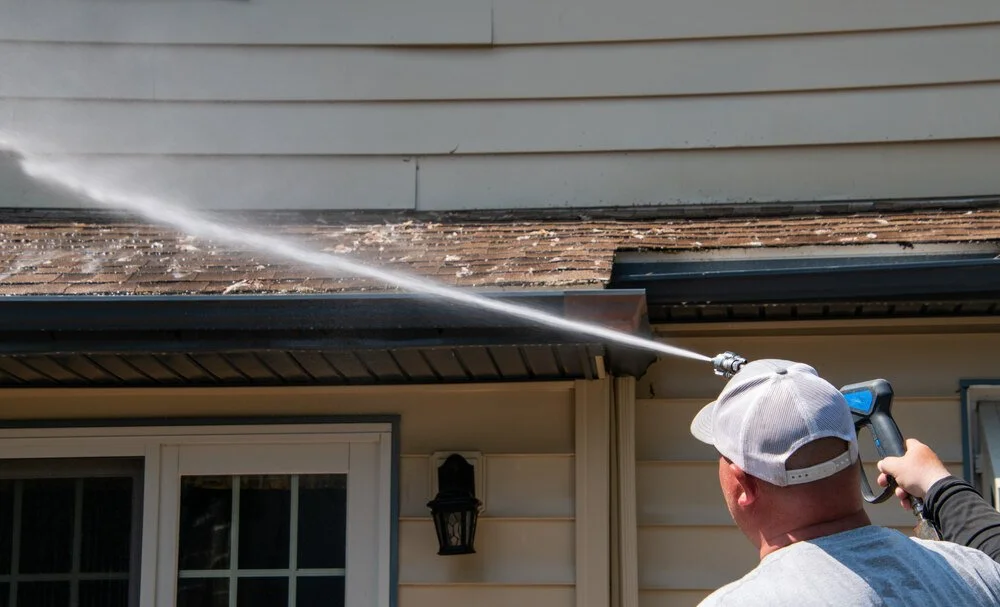
Routine cleaning is essential. Professional exterior washing removes organic growth at the root level instead of just light surface cleaning. Keeping surfaces dry and improving airflow also helps reduce regrowth.
Algae and Gloeocapsa Magma (Yes, It’s Not Just on Roofs)
Algae is another major culprit behind black spots. While many people associate algae with roofs, it also grows on concrete surfaces—especially in areas that stay damp.
Gloeocapsa magma, a type of airborne algae, feeds on moisture and minerals in concrete. As it spreads, it creates dark stains that often look blotchy or smeared.
Common signs:
- Black or dark green speckled patterns
- Slippery surface texture when wet
- Faster growth in shaded areas
Why it happens locally:
Indianapolis weather creates a repeating cycle of wet and humid conditions, followed by temperature swings that keep surfaces damp longer than they should be.
How to stop it:
Low-pressure soft washing techniques are most effective. Unlike high-pressure blasting, soft washing kills the biological source so it doesn’t immediately return.
Tire Marks and Rubber Transfer
Not all black spots are biological. Some are simply chemical or physical transfer from tires.
When vehicles turn, brake, or sit in place for long periods, rubber compounds can transfer onto hot concrete. Over time, these marks oxidize and darken, becoming more noticeable and harder to remove.
Why it sticks:
Concrete heat opens pores slightly, allowing rubber particles to bond more deeply than surface-level dirt.
How to stop it:
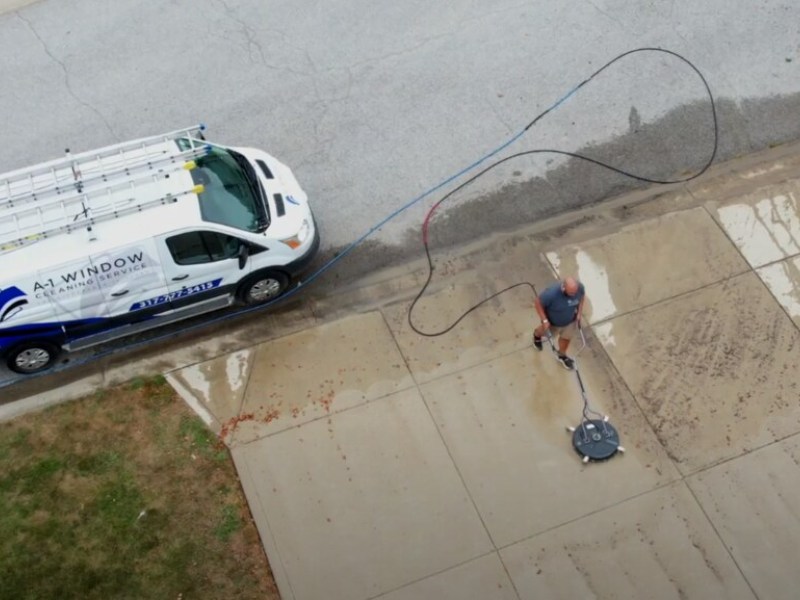
Degreasing agents combined with professional surface cleaning can lift embedded rubber without damaging the concrete finish.
Oil, Grease, and Automotive Fluid Stains
Driveways are especially vulnerable to vehicle leaks. Engine oil, transmission fluid, and other automotive chemicals soak into concrete and oxidize over time, creating dark patches that often look like black spots or blotches.
These stains are stubborn because they don’t just sit on the surface—they penetrate deep into the pores.
Why it happens:
- Parked vehicles leaking fluids
- Lack of sealing protection
- Heat accelerating absorption
How to stop it:
Fast response matters. The longer oil sits, the deeper it goes. Professional-grade degreasers and hot-water pressure washing can significantly reduce or eliminate visible staining.
Dirt Embedded in Porous Concrete
Sometimes black spots aren’t growth or chemicals at all—they’re simply dirt that has been ground into the surface over time.
Foot traffic, weather, and runoff push fine particles into concrete pores. Once trapped, they darken and create speckled patterns that don’t rinse away easily.
Why it happens in Indianapolis:
Seasonal changes bring mud, salt, sand, and debris that repeatedly settle on walkways and driveways.
How to stop it:
Deep cleaning combined with sealing helps prevent dirt from embedding again.
The Guide: How A-1 Window Cleaning Solves Black Spot Problems
The key to eliminating black spots isn’t just cleaning harder—it’s cleaning smarter.
At A-1 Window Cleaning, we help Indianapolis homeowners and property managers identify the real cause of staining before treating it. That matters because different causes require different solutions.
Our approach focuses on:
- Removing mold, algae, and organic growth at the root
- Treating oil and rubber stains with targeted cleaning methods
- Restoring curb appeal without damaging concrete surfaces
- Helping prevent future buildup through proper maintenance
Instead of temporary results, the goal is long-term surface health.
The Simple Plan: How to Keep Black Spots from Coming Back
Once your concrete is clean, protecting it becomes the priority.
Schedule regular exterior cleaning – Prevent buildup before it becomes visible
Improve drainage and sunlight exposure – Reduce moisture retention
Apply protective sealing when appropriate – Block absorption of water, oil, and organic matter
Address stains quickly – The faster you treat them, the easier they are to remove
Consistency is what keeps black spots from becoming a recurring problem.
Restore Your Concrete Before the Spots Spread
Black spots may look like a cosmetic issue, but they often signal deeper moisture or contamination problems. Left untreated, they spread, darken, and become significantly harder to remove.
If your driveway or sidewalk in Indianapolis is showing signs of black spotting, now is the time to act.