Concrete is one of the most durable building materials in Indianapolis homes and businesses—but “durable” doesn’t mean “invincible.” Between harsh winters, heavy traffic, and everyday wear, concrete surfaces slowly break down if they’re not protected.
For homeowners and property managers, the real challenge isn’t just having concrete—it’s keeping it from cracking, staining, and deteriorating over time. That’s where understanding the threats (and how to stop them) makes all the difference.
At A-1 Window Cleaning, we help property owners protect their exterior surfaces by identifying problems early and preventing long-term damage before it gets expensive.
The Real Problem: Concrete Starts Strong, Then Slowly Breaks Down
Most people think concrete is permanent. But in reality, it’s porous—meaning it absorbs water, chemicals, and debris. Over time, those small intrusions turn into visible damage.
In Indianapolis, where the weather shifts from freezing winters to hot, humid summers, concrete goes through constant stress cycles. That expansion and contraction is one of the biggest reasons driveways, sidewalks, patios, and commercial slabs deteriorate faster than expected.
Here are the most common threats your concrete is facing right now.
Freeze–Thaw Cycles (The Silent Cracker)
Indiana winters are tough on concrete. When water seeps into small pores and cracks, it freezes and expands. Then it thaws, leaving more space for water to get in again.
This repeated cycle slowly widens cracks and weakens the slab from the inside out.
How to stop it:
Sealing your concrete is the first line of defense. A high-quality sealant blocks moisture absorption and significantly reduces freeze-thaw damage.
Road Salt and De-Icers (Chemical Erosion)
Salt might keep sidewalks safe in winter, but it’s harsh on concrete. Chlorides in de-icing products penetrate the surface, causing scaling, flaking, and internal deterioration.
Over time, salt also accelerates corrosion in any steel reinforcement inside the concrete.
How to stop it:
Limit direct salt use when possible and switch to calcium magnesium acetate or sand-based traction alternatives. Sealing the surface before winter also reduces chemical absorption.
Oil, Grease, and Automotive Fluids (Permanent Stains)
Driveways and garages take a daily beating from vehicles. Oil, transmission fluid, and grease don’t just stain—they seep into the pores of concrete and break down its structure over time.
Once these substances penetrate deeply, they are extremely difficult to remove completely.
How to stop it:
Quick cleanup is critical. The longer spills sit, the deeper they go. Professional cleaning and degreasing treatments help restore appearance and prevent long-term damage.
Water Intrusion and Poor Drainage
Standing water is one of the most underrated threats to concrete surfaces. When water doesn’t drain properly, it sits on or under the slab, weakening the base and encouraging cracking, settling, and erosion.
In Indianapolis, heavy rain seasons make this even worse.
How to stop it:
Ensure gutters, downspouts, and grading move water away from concrete surfaces. Regular inspections can identify pooling areas before they cause structural issues.
UV Exposure and Surface Breakdown
Sunlight doesn’t just fade color—it slowly dries out the surface layer of concrete. This leads to dusting, chalking, and weakened structural integrity over time.
While not as dramatic as cracking, UV damage gradually reduces surface strength.
How to stop it:
Concrete sealers with UV protection help preserve surface integrity and maintain appearance longer.
Mold, Mildew, and Organic Growth
Moisture combined with shade creates the perfect environment for algae, moss, and mildew. Not only do these make concrete slippery and unsafe, but they also trap moisture against the surface, speeding up deterioration.
How to stop it:
Routine professional cleaning removes organic buildup before it spreads. Keeping surfaces dry and well-exposed to sunlight also helps reduce growth.
Heavy Traffic and Surface Wear
Foot traffic, vehicles, equipment, and seasonal use all contribute to surface erosion. Over time, repeated pressure weakens the top layer of concrete, especially if it isn’t sealed.
How to stop it:
Regular maintenance cleaning and protective sealing help extend surface life and reduce abrasion damage.
The Guide: How A-1 Window Cleaning Helps Protect Your Concrete
You don’t need to guess when your concrete is at risk. The key is prevention and maintenance—not just repair after damage happens.
At A-1 Window Cleaning, we help Indianapolis property owners protect their investment with exterior cleaning solutions designed to:
- Remove embedded dirt, stains, and organic growth
- Improve surface safety by eliminating slippery buildup
- Extend the life of driveways, walkways, patios, and commercial concrete
- Identify early warning signs of cracking and deterioration
We don’t just clean surfaces—we help you protect them from long-term damage.
The Simple Plan: Protect Your Concrete in 3 Steps
Inspect regularly – Look for cracks, stains, or pooling water
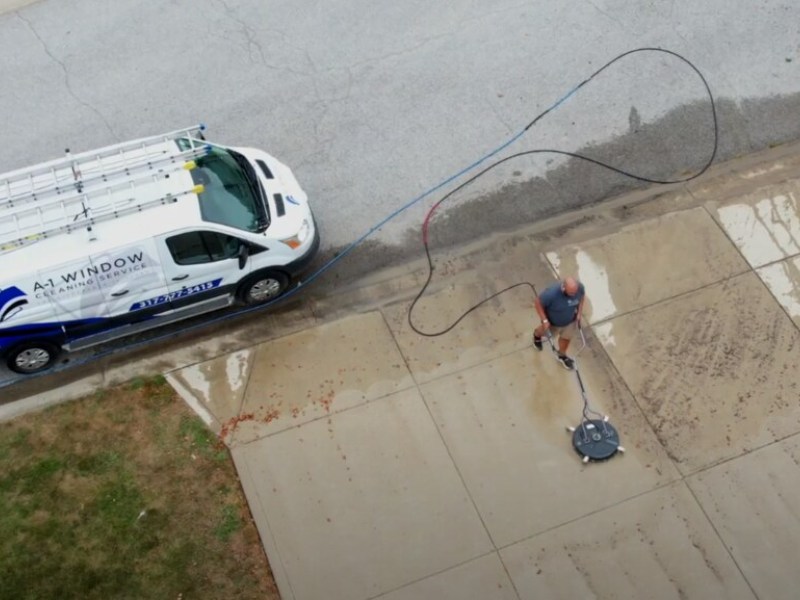
Clean professionally – Remove buildup before it becomes permanent damage
Seal and maintain – Add protection before seasonal weather hits hard
When done consistently, these steps dramatically extend the life of your concrete and reduce costly repairs.